








hero
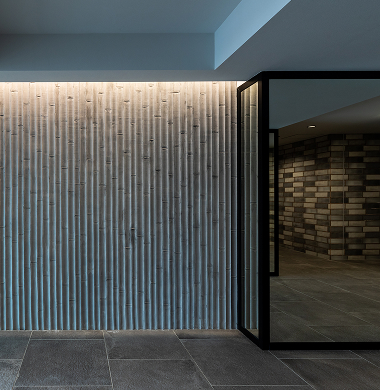
Crafted by Tradition.
Designed for the World.
私たちのハンドメイドポータブル竈は、
何世紀にもわたる日本の左官技術の卓越性を体現しています。
about
about1about2
ABOUT PLASTERER
左官の物語と伝統
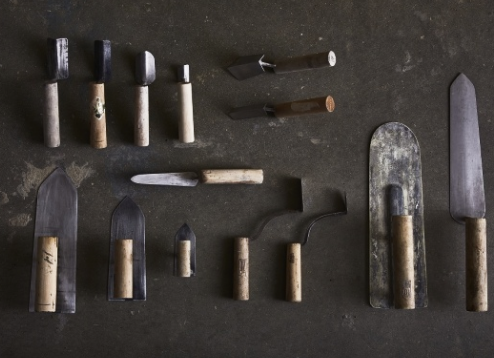
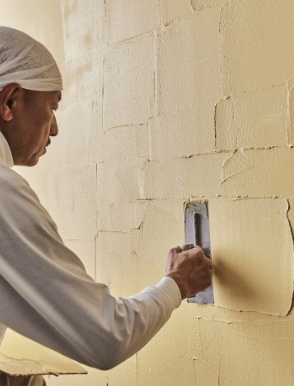
For more than a millennium, sakan artisans have coaxed earth, sand, and lime into living architecture—walls that are not only strong but "breathe," inhaling humidity and exhaling dryness to suit Japan's four distinct seasons. One enduring testament is the 7th-century earthern wall of Hōryū-ji Temple, its layers of tamped clay still intact after ~1,300 years, proof of rammed earth's quiet resilience. Yet the craft has teetered on the brink: from some 300,000 plasterers in 1975, barely 70,000 remain today, most over sixty, as post-war construction turned to drywall and vinyl finishes.
Against that fading backdrop stands Harada Sakan. Founded in Tokyo in 1949 and now led by third-generation president Muneaki Harada, the company weaves "dreams and romanticism" into proposal-based plastering that marries heritage with invention—think shikkui walls tinted with coffee grounds or lipstick pigments.
plastering techniques
PLASTERING TECHNIQUES
左官技術
PLASTERING TECHNIQUES
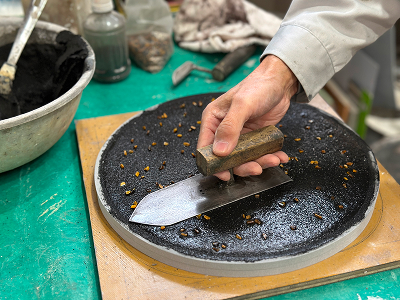
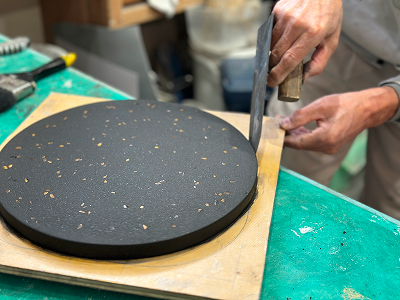
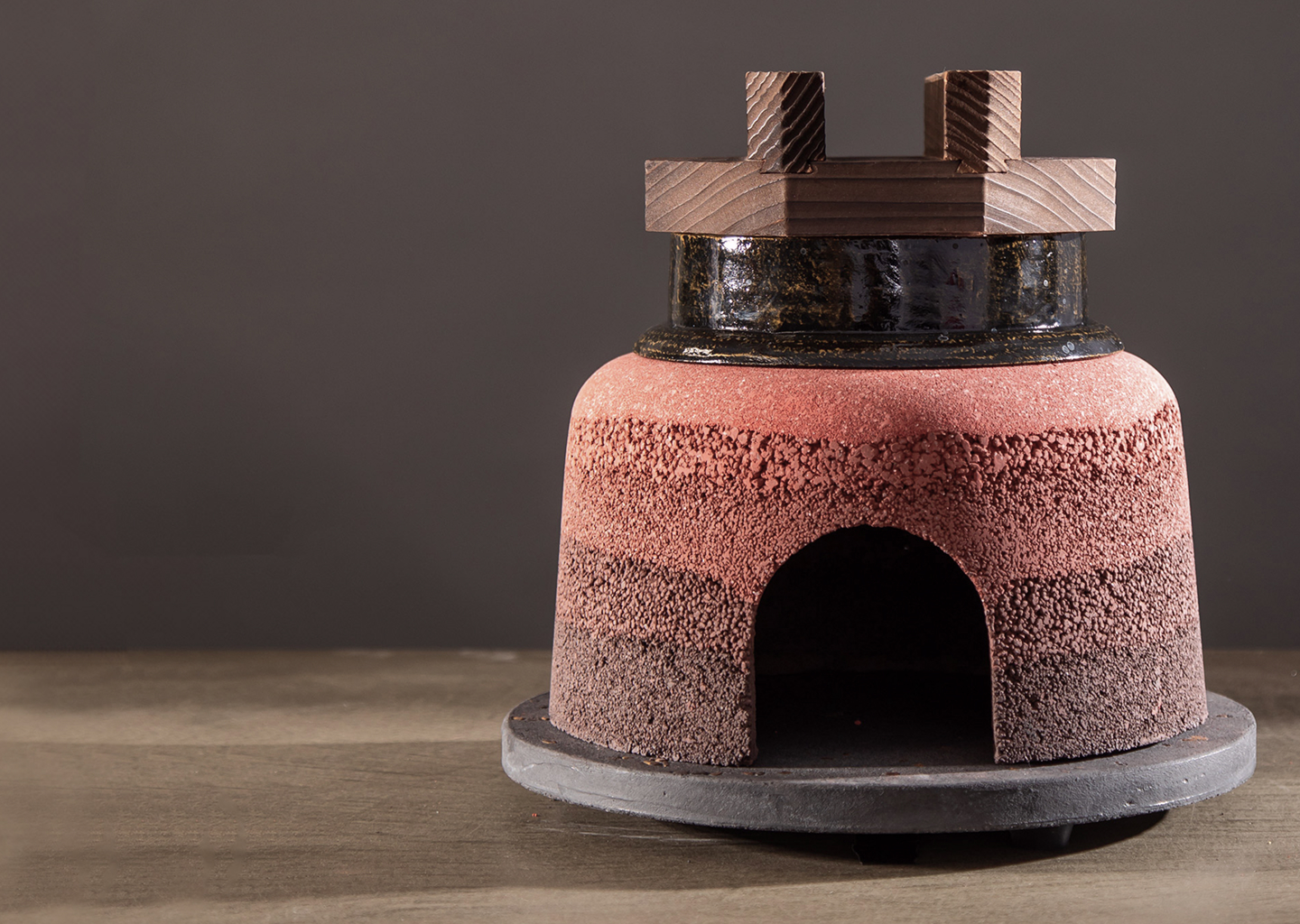
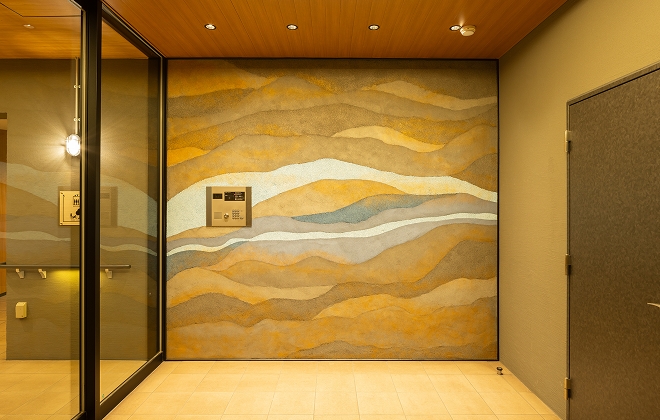
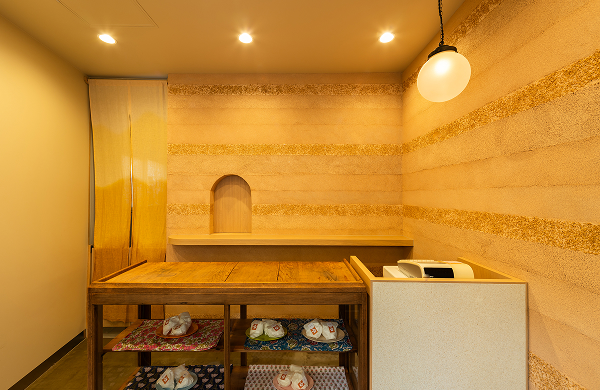
This finish is a trowel-applied version of the HANZUKI technique, in which soil and other materials are hardened into a frame. By using trowel application, free expression that was not possible with HANZUKURI became possible. There are various finishing variations, such as shaking the layers and adding vivid colors. This technique is also used for HANZUKI KAMADO.
PLASTERING TECHNIQUES
Karesansui
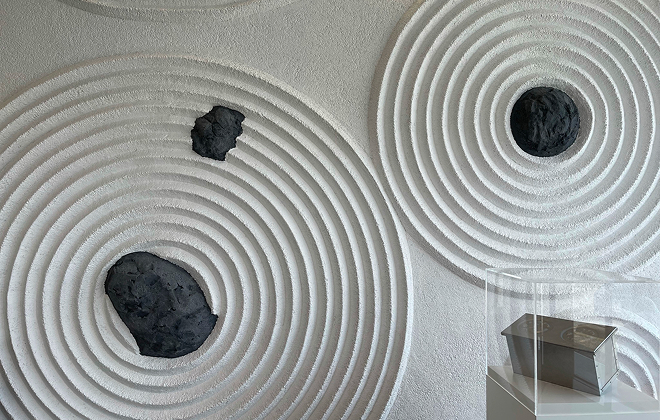
Karesansui is a garden technique that visually expresses the Zen philosophy. The plastering method is used to copy the pattern on the wall. This technique utilizes traditional Japanese design.
Karesansui
Origami (paper folding)
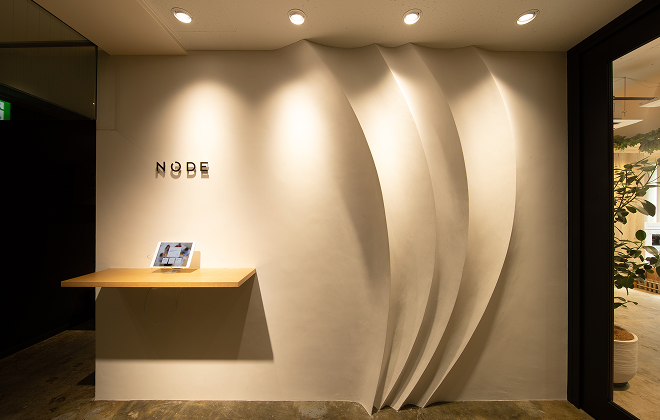
The finish reproduces origami-like patterns and folded cloth-like patterns with plaster finish. Gentle curves and mountains are created while subtly changing the angles. This finish is simple but full of plastering skills.
Origami (paper folding)
plastering works
WORKS
施工実績
タイトルがはいりますタイトルがはいります
もみがらをいれた塗り版築
もみがらをいれた塗り版築
タイトルがはいりますタイトルがはいります
Why Hearth
WHY THE HEARTH?
なぜ竈なのか?
Hearth Hero
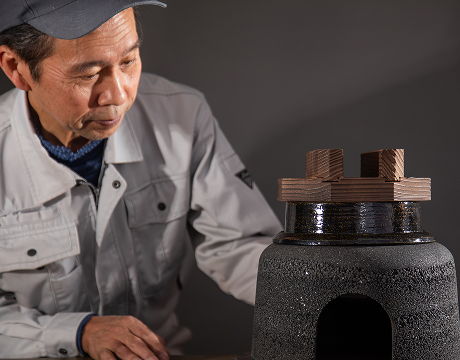
Compact kamado made with plastering techniques
左官の技術を活かして作ったコンパクトなかまど
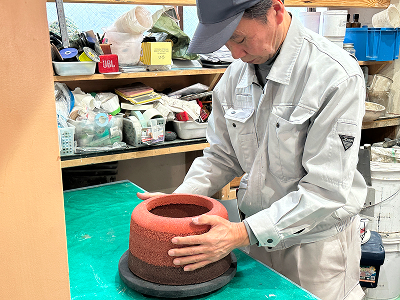
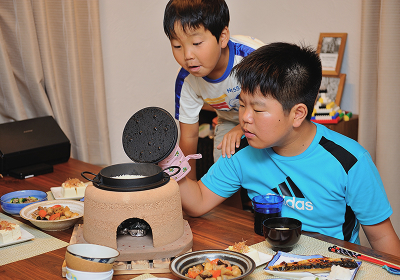
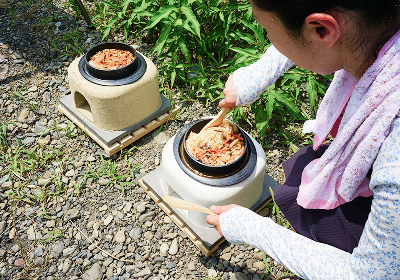
Harada Plastering used the “HANZUKURI” technique, one of the plastering techniques, to create a tabletop kamado. This compact kamado was made using plastering techniques.
Using commercially available solid fuel, the water in the kamado is convected by a solid fire, and the rice is cooked to a standing state. The cooked rice tastes so good that the rice stands up and is incomparable to electric kettles
Image 1
Image 2
Image 3
“HANCHIKU KAMADO” invented by a veteran craftsman
ベテラン職人が考案した「版築かまど」
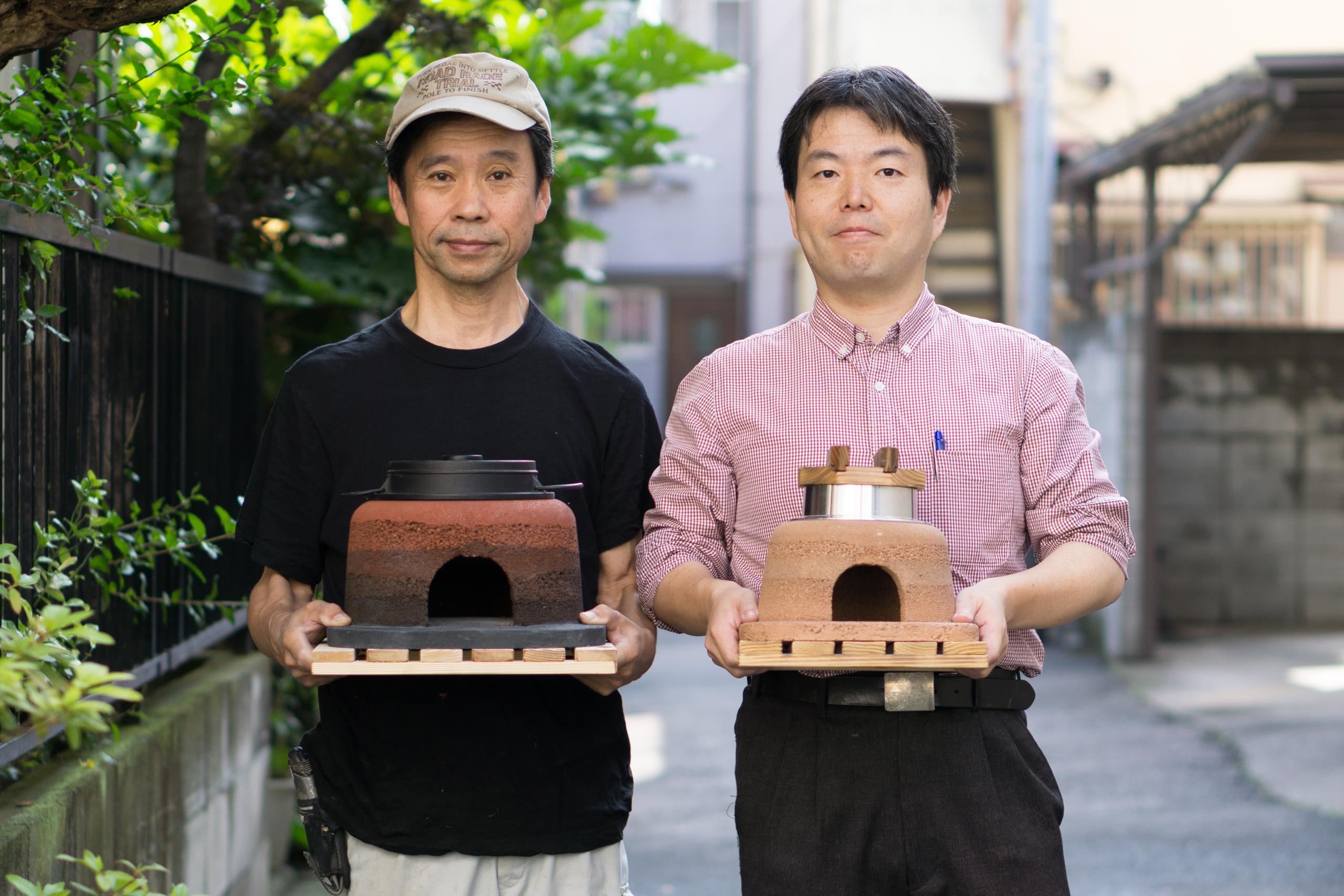
The HANCHIKU KAMADO was invented by Fumio Nakajima, a veteran plasterer at Harada Plastering.
He came up with the idea after much trial and error to create something that would be accessible to everyone, with the wish to “let everyone know how good plastering can be.
We hope that you will experience the deliciousness of rice and the excellence of plastering with our handmade HANCHIKU KAMADO.
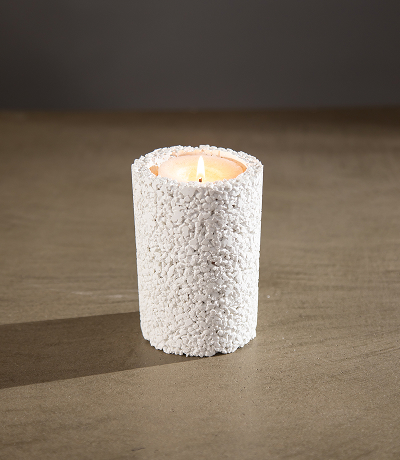
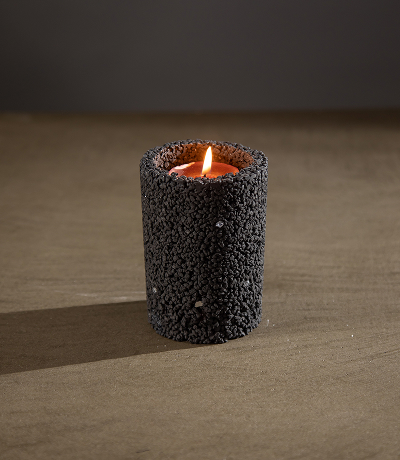
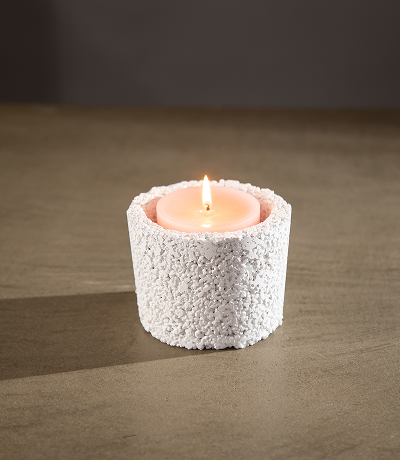
Currently, our efforts have expanded to include the production of candleholders that utilize plastering techniques. We hope that these interior decoration products will bring plastering closer to you.
Image 1
Image 2
Products
PRODUCTS
製品の特徴
Product Image 1Product Image 2Product Image 3Product Image 4
Lineup
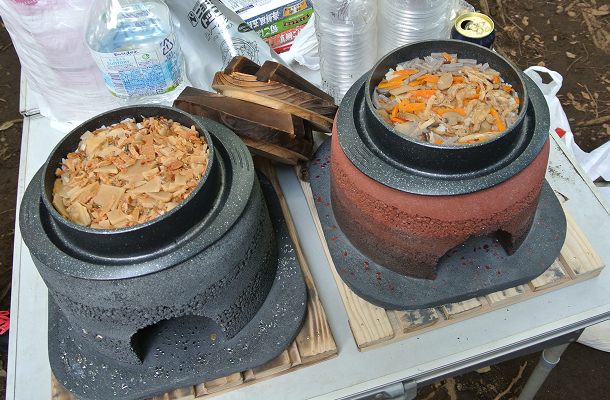
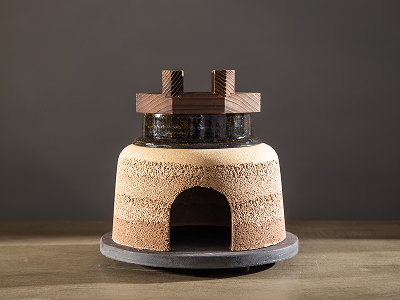
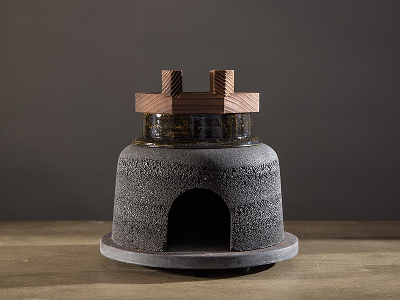
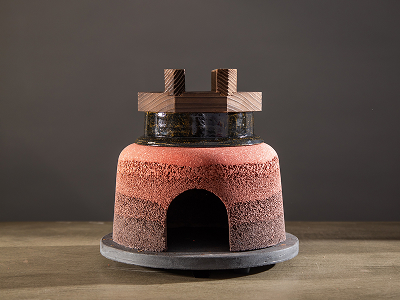
Three standard colors are available: earth colors like clay walls, powerful ash red, and chic ash black. Sizes are available in 1-, 2-, and 3-cup cooking pots. Custom-made colors are also available. (Additional charges may be incurred for custom colors.)
Image 1
Image 2
Image 3
Product details and standard price
Size may vary due to the handmade nature of the kamado.
Solid fuel is sold separately.
The amount of money has been changed in accordance with the mandatory display of consumption tax included.
Shipping fees may differ for Hokkaido, Okinawa, and remote islands.
1-cup version of tsuki kamado

Standard price: Please visit our Kickstarter page

Weight: approx. 5.5kg

Size: Width approx. 260 mm, depth approx. 260 mm, height approx. 230 mm

Accessories: Kettle (aluminum)
2-cup version of tsuki kamado

Standard price: Please visit our Kickstarter page

Weight: approx. 8.8 kg

Size: Width approx. 300 mm, Depth approx. 300 mm, Height approx. 300 mm

Accessories: Kettle (aluminum)

3-cup version of tsuki kamado

Standard price: Please visit our Kickstarter page

Weight: approx. 8.8 kg

Size: Width approx. 260 mm, depth approx. 260 mm, height approx. 230 mm

Accessories: Kettle (aluminum)
Aluminum “kettle”
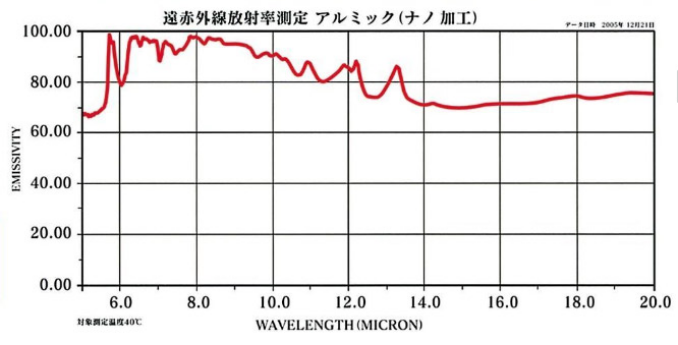
The kettle is an aluminum kettle handled by Tonami Shoten. Far-infrared radiation makes the rice fluffy and tasty.
The kettle is made of aluminum, which has a superior function that is not found in ordinary aluminum kettles.
Graph
The aluminum kettle is lightweight, rust-resistant, and easy to clean.
The outside is finished in a cast iron style, giving it a massive appearance.

Candle Lineup
Two standard colors are available: white and black.
There is a tall, narrow design and a low, thick design.
Image 1
Image 2
Image 3
Candle high slender

Standard price: Please visit our Kickstarter page

Weight: approx. 0.8 kg

Size: Diameter: 85 mm, Height: 117 mm

Attachment: Candle

Candle low thick

Standard price: Please visit our Kickstarter page

Weight: approx. 0.9 kg

Size: Diameter: 85 mm, Height: 117 mm

Attachment: Candle

integration
Integration of manufacturing process and plastering
製造プロセスと左官施工の融合
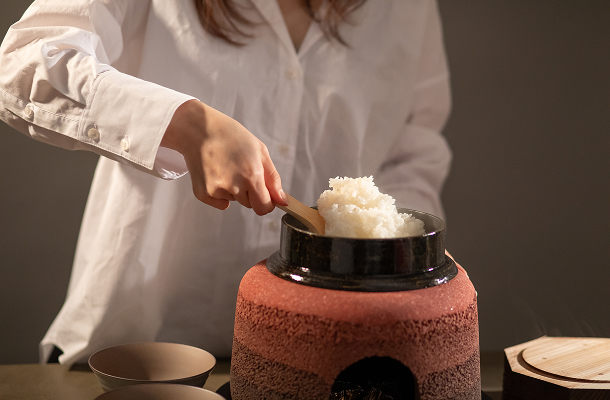
Harada Sakan's rammed-earth kamado distills centuries of craft into a tabletop hearth. Artisans hand-layer mineral-rich clay into a compact mold, compressing each stratrum to reveal natural terracota, ochre, and ash-grey bands—no two stoves share the same geological pattern.
Once cured, the kamado becomes both sculpture and stove: add solid smokeless fuel, set a small pot atop, and enjoy silent, even heat that coaxes rice into sweet, lustrous perfection with a hint of okoge crust. Lightweight yet sturdy, it travels easily between indoor table and open-air patio, offering the elemental warmth of fire, earth, and shared anticipation in every meal.
Image 1
Image 2
Image 3
craftsmen
Fumio Nakajima
Born in 1953, he comes from a family of plasterers who have been plastering for generations. He began his training at the age of 15 with a trowel. He specializes in combining traditional plastering techniques with innovative ideas, and plays a central role in the plastering process at Harada Plastering Works. He is also involved in the development of interior products utilizing plastering techniques, among which he developed the “HANCHIKU KAMADO”.
OUR CRAFTSMEN
職人の紹介
integration
SHIPPING & GLOBAL INFORMATION
配送&グローバル情報
Shipping from Japan to the World
Our logistics partners provide door-to-door tracking, while commercial invoices and HS codes are prepared in advance—only local duties or VAT are collected on delivery, and our bilingual staff will liaise with customs if needed.
Q&A

Q

How do I cook rice on the tabletop kamado?

question icons

Q

Does it smoke, and is it safe indoors?

question icons

Q

How much rice can it cook?

question icons

Q

Do I need special gear?

question icons

Q

What's it made of, and is it fragile?
question icons

Q

How do I buy from overseas?

question icons

Q

Can Harada Sakan build rammed-earth walls abroad?

question icons

Q

What's it made of, and is it fragile?

question icons
logo
Copyright 2025 Haradasakan Co.,Ltd. All Rights Reserved